Preparing for your first audiologist appointment
A practical guide to gathering your hearing history, understanding the appointment, and bringing questions that connect results to daily life.
An educational guide from Online Hearing Test. Sources linked throughout.
Start with what you want help with
You do not need to know whether you have hearing loss before arranging an assessment. Your first appointment is a chance to describe what you notice, ask questions and understand which tests may help. You also do not need an online result to justify attending.
Write one sentence about your main concern: “I miss words during work meetings,” or “I have started using the other ear for calls.” Then add what you hope to learn. This makes it easier to return to your priorities if the appointment introduces unfamiliar terms.
If your hearing has suddenly dropped or worsened over a few days, seek medical attention immediately rather than waiting for a routine appointment. NIDCD explains the urgency of sudden hearing loss.
Bring a concise history
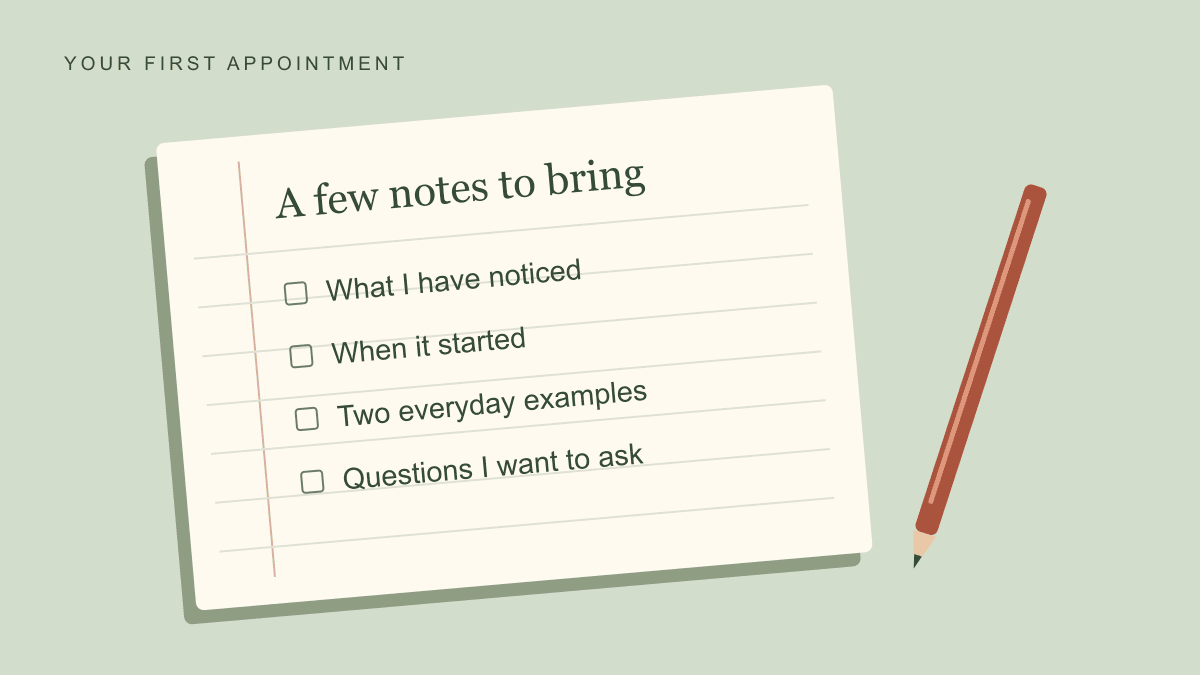
Gather any previous clinical hearing results and a list of your medicines. Note when the concern began, whether it affects one or both ears, and any ear symptoms or relevant noise exposure. These are among the topics in ASHA’s guidance on the hearing case history.
You do not need perfect dates or medical vocabulary. “Around the start of summer” is more useful than leaving the timing out because you cannot remember the day. If another person noticed a change, include their observation and distinguish it from your own experience.
Choose two everyday examples to bring: one situation that feels easy and one that feels difficult. For each, note the setting and the particular problem. A meeting with overlapping voices gives a different starting point from difficulty hearing someone in a quiet room.
Check the practical details
Ask the clinic what the appointment includes, how long to allow and whether you need a referral or paperwork. Confirm costs or coverage directly with the provider. Requirements vary, so the clinic is the best source for its own arrangements.
Tell the clinic ahead of time about communication or access needs. You might ask for written information, an interpreter or space for a support person. If you want someone to come with you, check the arrangements and tell them which concerns you want help remembering.
Understand the tests before they start
Depending on the assessment, you may respond to tones through earphones, repeat speech, or have the movement of your eardrum checked with a small probe. ASHA’s overview of hearing tests explains these procedures. Not every person needs every test.
Ask what you should do when a sound is very faint or you are unsure. Tell the audiologist if instructions are unclear or you need a break. If background noise is your main concern, mention it before testing and ask whether the assessment will explore that situation.
Questions to bring to the discussion
- What do these results show, and what remains uncertain?
- How do they relate to the difficulty I described?
- Are any further tests or medical referrals needed?
- What are my next steps, and when should I follow up?
- Can I have a copy of the results and a written explanation?
Before leaving, try explaining the next step back in your own words. If the plan is unclear, ask for clarification then. You do not have to memorise every number or symbol to understand what happens next.
If you already have a home report
You may bring a download from our free hearing check as background information. It records six pitches in each ear and is available without an account or payment. Note the headphones used and any setup problems.
Explain that its graph uses uncalibrated relative playback levels, not clinical dB HL or measured dB SPL. It cannot establish a diagnosis or replace the appointment’s measurements. Bring your real-life examples alongside it so the conversation stays connected to what matters to you.