AI Hearing Explanations: Useful Help and Clear Limits
See what optional AI receives, what it can explain and why it cannot diagnose hearing loss or improve home measurements.
An educational guide from Online Hearing Test. Sources linked throughout.
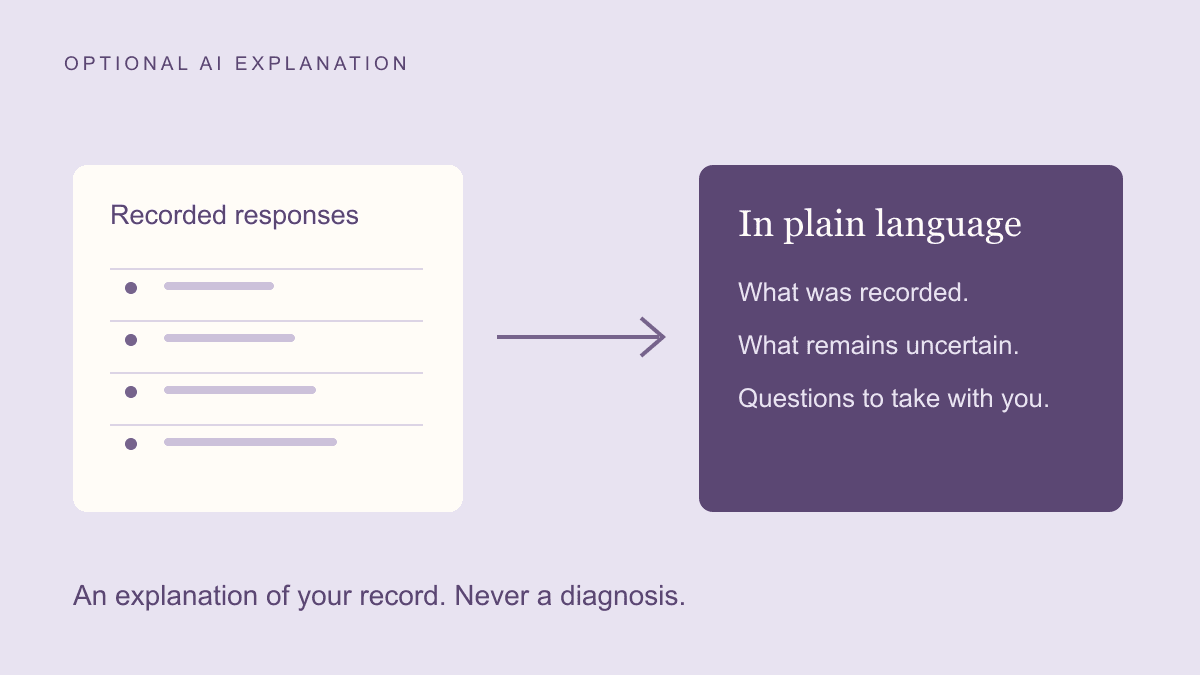
Start with what the explanation receives
The optional AI feature on this site receives the hearing-check responses only after you choose to send them to Our AI. The response data describe pitch, relative playback level and whether a result was confirmed, limited or inconclusive. They are observations from one device setup.
It does not receive a clinical audiogram, age, an examination of your ears or a medical history through this feature. It should not fill in that missing information. A polished explanation does not turn limited input into a diagnosis.
What useful AI help looks like
A useful explanation puts the pattern into plain language, connects supported observations to possible everyday listening situations, and offers practical communication ideas. It can help you describe concerns at home, in meetings or at an appointment, while distinguishing recorded findings from possibilities to notice.
For example, a point marked “no response” should be described as no confirmed response within this check’s range. It should not become a hearing threshold at the maximum setting. An inconclusive point remains unmeasured rather than being replaced with a guessed number.
The explanation should stay close to the observations. It may mention that patterns can be affected by setup, but it should not decide which explanation applies to you.
What it must not conclude
Our home check is uncalibrated. AI cannot calculate clinical severity from its relative levels, declare hearing normal, compare you with age norms or infer the cause of a difference between ears. It also does not improve the tone measurements, set the volume or adjust the test while you listen.
Clinical interpretation uses information beyond this dataset. ASHA describes hearing assessment in the context of history and multiple tests. The site’s optional text should support understanding of the home record, without pretending to perform that assessment.
Choose whether to share the responses
You can use the free hearing check and download your graph without an account, payment or AI request. Requesting the free explanation is a separate choice. The consent control explains that the responses will be sent to Our AI; name and email are not included in that request.
If you prefer not to send the responses, skip the feature. If the service is unavailable, you still have the graph and table. Read generated text critically and keep the original recorded values beside it. Any completed explanation is included when you download the report afterward.
Use it to prepare questions, not postpone care
Take any persistent concern to a hearing professional whether the explanation sounds reassuring or uncertain. You can ask what the home record can contribute, what it leaves unanswered and which assessment would address the situations you find difficult.
For sudden hearing loss, seek medical attention immediately. Do not wait for generation, retries or a second online check. NIDCD explains the need for prompt assessment.